
Gunung Leuser National Park is one of Indonesia’s most important natural areas. Covering 7,927 square kilometers in northern Sumatra, the park stretches across Aceh and North Sumatra. About one-fourth of the park lies in Aceh, while three-fourths lies in North Sumatra.
The park forms part of the Barisan mountain range and takes its name from Mount Leuser, which rises to 3,119 meters. Its forests protect many ecosystems and provide habitat for endangered wildlife, including the Sumatran orangutan.
A Vast Mountain Wilderness
Gunung Leuser National Park extends about 150 kilometers from north to south and more than 100 kilometers across at its widest points.
Around 40% of the park, mainly in the northwest, consists of steep terrain above 1,500 meters. About 12% of the park in the lower southern area sits below 600 meters above sea level.
The park contains 11 peaks higher than 2,700 meters. Mount Leuser reaches 3,119 meters and ranks as the third-highest peak in the Leuser Range. Mount Tanpa Nama is the highest peak in the range at 3,466 meters.
The area provides extensive terrain for trekking and wildlife observation.
A Critical Refuge for Sumatran Orangutans
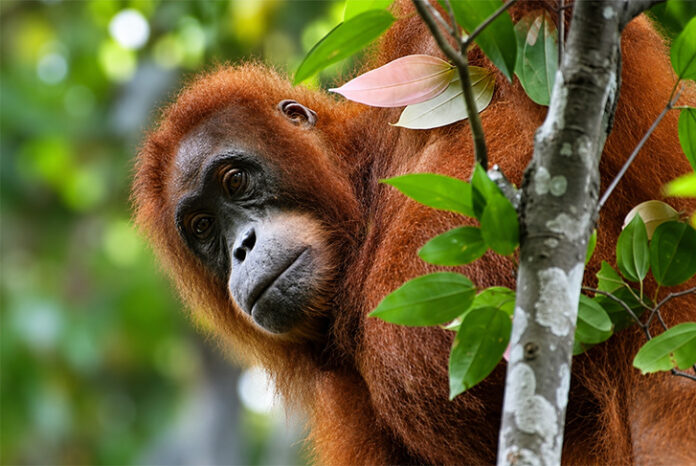
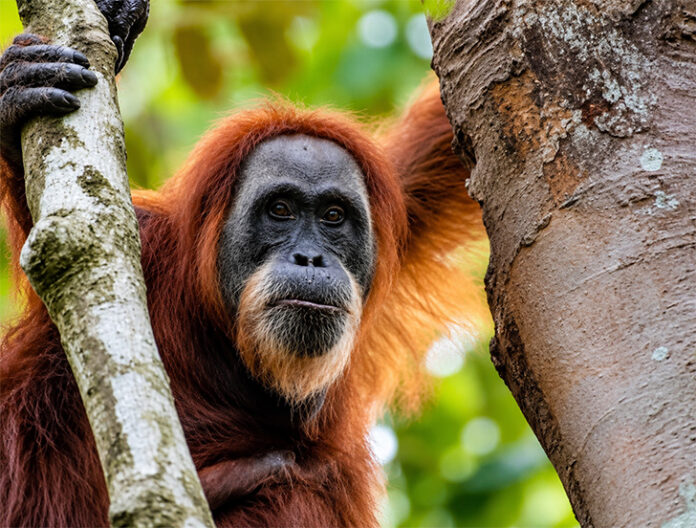
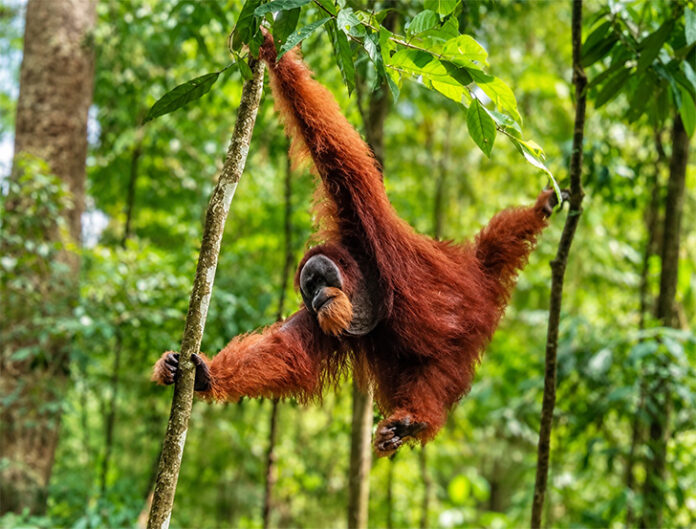
Gunung Leuser National Park is one of only two remaining habitats for the Sumatran orangutan, scientifically known as Pongo abelii.
Bukit Lawang, located within the park, is known for its orangutan sanctuary. The park also has a long history of orangutan research.
In 1971, Herman Rijksen established the Ketambe Research Station as a dedicated research area for orangutans.
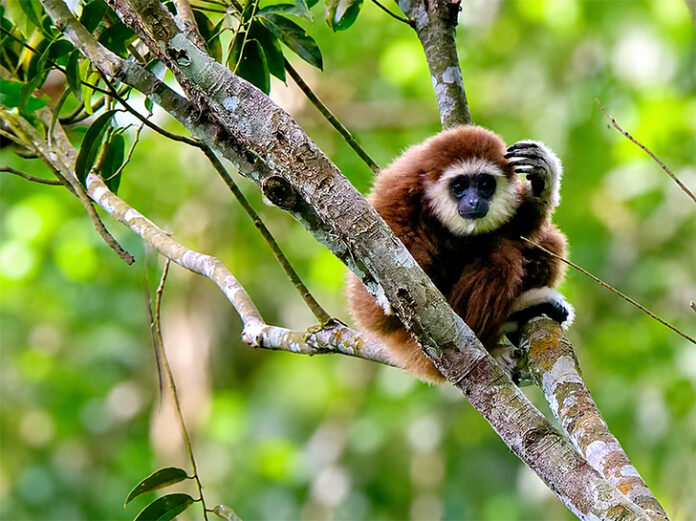
The park also supports other important mammals. They include the Sumatran elephant, Sumatran tiger, Sumatran rhinoceros, siamang, Sumatran serow, sambar deer and leopard cat.
Sumatran Rhino Numbers Show a Serious Challenge
Researchers have also documented the condition of the Sumatran rhinoceros population.
In July 2011, researchers installed 28 camera traps. Six months later, the cameras recorded one male and six female Sumatran rhinos.
Based on those findings, researchers estimated that no more than 27 Sumatran rhinos remained in the area. The total population across Sumatra and Malaysia was estimated at about 200 animals.
That estimate represented roughly half the population recorded 15 years earlier.
Leuser Protects More Than Wildlife
The importance of the Leuser Ecosystem extends beyond forests and wildlife.
The ecosystem also supports water supplies, agriculture, fisheries, aquaculture and electricity generation. Changes to the forest can therefore affect communities and economic activities far beyond the park itself.
Signs of declining water replenishment have already appeared in and around the Leuser Ecosystem.
Groundwater reservoirs are being rapidly depleted. Several rivers also become completely dry during parts of the year.
These changes can create water shortages and increase water costs for households and industries.
Fisheries Depend on Fresh Water
Coastal fisheries and aquaculture around the Leuser area have major economic and social importance.
They provide a significant share of animal protein consumed by local communities. They also generate foreign exchange.
Their annual value currently exceeds US$171 million.
If the Leuser Ecosystem continues to degrade, declining freshwater availability could affect the performance of the fishery sector.
Forest Loss Can Increase Flood Risks
Forests also influence how water moves through the landscape.
Flooding generally becomes more frequent and more destructive when forests are converted to other land uses.
Annual storm flows from secondary forests can reach about three times the level recorded from primary forest catchments of similar size.
Acehnese farmers have reported more frequent droughts and damaging floods linked to degradation of water catchment areas.
In May 1998, more than 5,000 hectares of intensive rice-growing areas were taken out of production. The problem followed the failure of 29 irrigation schemes caused by water shortages.
A major flood in December 2000 killed at least 190 people and left 660,000 people homeless. The disaster caused almost US$90 million in losses in Aceh.
Logging companies have reportedly begun to recognise their role in increasing flood risks.
Agriculture Faces Its Own Risks
Agriculture remains a major source of income for communities around Leuser.
Large rubber and oil palm plantations in northern Sumatra also contribute significantly to Indonesia’s national economy.
However, almost all remaining lowland forest areas have officially been allocated for oil palm plantations.
Several regencies in the Leuser area have recorded declining agricultural yields. The reported causes include declining soil nutrients, soil erosion, drought, floods and increasing weed problems.
These factors show how changes in forest and water systems can affect agricultural productivity.
Hydropower Also Relies on Leuser
Water from the Leuser area supports hydroelectric plants in several regencies, including Aceh Tenggara.
The hydroelectric plants in Aceh Tenggara operate on a small economic scale. Their operating conditions have worsened in recent years.
Increased erosion in waterways has forced operators to remove excessive sediment from turbines. This creates more frequent interruptions in electricity supplies, higher operating costs and damage to turbine blades.
One plant eventually closed because of insufficient water.
Many of these disruptions are considered abnormal and may be linked to deforestation.
Ecotourism Could Turn Conservation Into Local Income
Low-impact ecotourism offers another way to use the Leuser Ecosystem without consuming its natural resources.
Wildlife tourism can provide communities with an economic reason to protect forests. Orangutan viewing is one example of an activity that can attract visitors while supporting conservation-related livelihoods.
Experts have identified ecotourism as a major potential source of revenue for communities living around the Leuser area.
Gunung Leuser National Park therefore has value far beyond its role as a protected forest. Its ecosystems support endangered animals, freshwater systems, agriculture, fisheries, hydropower and potential tourism income.
Protecting the forest can help protect the natural systems that many communities and economic activities depend on.
Part of Sumatra’s World Heritage
Gunung Leuser National Park forms part of the Tropical Rainforest Heritage of Sumatra together with Bukit Barisan Selatan National Park and Kerinci Seblat National Park.
The designation reflects the importance of Sumatra’s tropical rainforest landscapes and their biological diversity.
For Gunung Leuser, the challenge is clear. The ecosystem must continue supporting wildlife and human communities while facing pressure from forest conversion, declining water availability, erosion, drought and flooding.
Its future matters to both the animals living inside the forest and the people whose livelihoods depend on the systems surrounding it.